
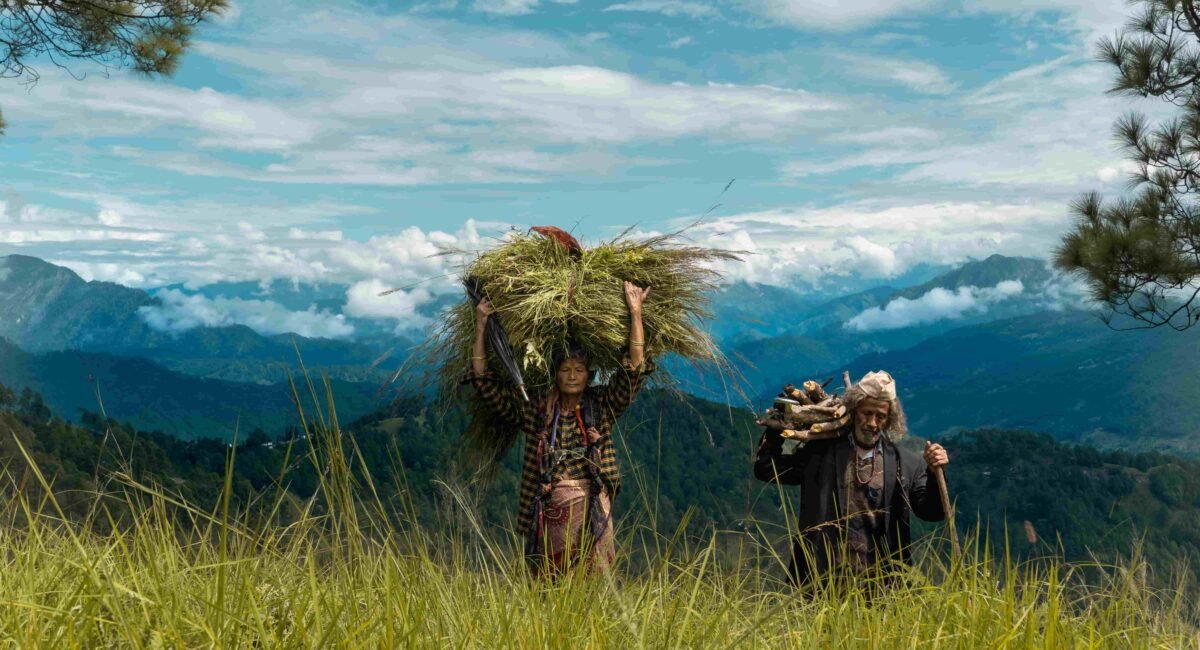
Pyre: The Story of Uttarakhand’s Emptying Villages, Migration and the Hope of Bringing Life Back to the Mountains
There is a particular kind of silence in the mountains that is difficult to explain. It is the silence of empty homes, locked doors, abandoned fields and village paths where children once played. The mountains are still beautiful, the rivers are still flowing and the traditional houses are still standing. But in many villages, the people who gave these places life are slowly disappearing.
This is the emotional reality explored in Pyre, a film directed by Vinod Kapri. At first glance, it may look like a simple story about an elderly couple living in a remote Himalayan village. But for anyone connected to Uttarakhand, the film carries a much deeper meaning. It reflects the pain of migration, the loneliness of ageing parents, the decline of village life and the search for better opportunities.
More importantly, it raises an important question: What happens to our villages when the younger generation has no reason to stay?
For Uttarakhand, this is not just a question from a movie. It is a reality that thousands of families have experienced. And while migration is a complex issue with many causes, creating sustainable livelihood opportunities within villages can be one important part of the solution.
What Is the Movie Pyre About?
Directed by Vinod Kapri, Pyre tells the story of an elderly couple, Padam and Tulsi, who live in a remote village in the Kumaon region of Uttarakhand. Their only son has moved to Mumbai in search of a better life and has been away for many years.
As the village gradually loses its residents, the couple find themselves increasingly isolated. Their everyday life revolves around their home, their memories, their conversations and their hope that their son will return one day.
The film stars Padam Singh Kapri and Hira Devi, two local residents who were not professional actors before appearing in the movie. Padam Singh is a retired Army man, while Hira Devi is a homemaker and former dancer. Their real-life experiences bring a natural feeling to the characters they portray.
According to an Indian Express feature on the film’s lead actors, the idea for Pyre came from Vinod Kapri’s interaction with an elderly couple during a visit to Munsiyari in 2017. The film was later shot in Purana Thal village in the Berinag area of Pithoragarh district.
Pyre was released in Indian theatres in October 2026 after travelling to several international film festivals. It also received the PÖFF Best Film Audience Award at the Tallinn Black Nights Film Festival. The International Film Festival of Kerala’s film profile records the award and the film’s festival journey.
According to reports about the film’s international journey, the makers have said that Pyre received 18 international awards. You can read more about its awards and theatrical release in India Today’s coverage.
However, the most important achievement of Pyre may not be its awards. It is the way the film brings attention to the people and villages that are often missing from mainstream conversations about development.
Pyre Is More Than a Love Story. It Reflects Uttarakhand’s Migration Problem
Uttarakhand is known for its natural beauty, peaceful villages, traditional culture and welcoming people. But behind this picture is another reality. Many families from the hill districts have moved to cities in search of education, employment, healthcare and a more secure future.
People migrate for different reasons. Some leave because there are not enough jobs. Others move because their children need better schools, family members need access to hospitals, or farming no longer provides enough income. For many young people, moving to Dehradun, Delhi, Mumbai or another city becomes a practical decision rather than a choice they make happily.
Over time, this movement affects the entire village.
When younger people leave, elderly parents may remain alone. Agricultural land may be left uncultivated. Traditional homes may slowly fall into disrepair. Local festivals and cultural practices may lose participation. Even when a village still exists on the map, its social and economic life can become weaker.
This is the reality that Pyre brings to the screen. The film does not suggest that every family should stop migrating. Instead, it makes us think about why so many people feel they have to leave their homes to build a better future.
Uttarakhand Migration: What Do the Numbers Tell Us?
The migration situation in Uttarakhand is not based only on personal stories. Reports from the state’s Rural Development and Migration Prevention Commission have also highlighted the scale of movement from village areas.
According to the Commission’s second interim migration survey, covering the period from 2018 to September 2022:
- 3,07,310 people were reported to have migrated temporarily from 6,436 village panchayats.
- 28,531 people were reported to have migrated permanently during the same period.
- The Commission’s reported total of completely uninhabited villages reached 1,792 by 2022.
These figures were reported by Business Standard, based on the Commission’s report.
It is important to understand the difference between temporary and permanent migration. Temporary migration generally refers to people who move away for work or other reasons but return to their villages periodically. Permanent migration refers to people who move with no plans to return. These figures therefore describe different forms of movement and should not be treated as the same thing.
The number of completely uninhabited villages also depends on the reporting period and the way a village is classified. A 2026 report by The New Indian Express discussed estimates ranging from 1,768 to 1,792 abandoned villages, reflecting differences in reporting and classification.
Behind every number is a home, a family and a story. A village becoming empty does not happen overnight. It often happens gradually, when one family leaves, then another, and eventually only a few elderly residents remain.
Why Are People Leaving Uttarakhand’s Villages?
Migration is rarely caused by one single problem. It is usually the result of several challenges that make life difficult for families living in remote mountain areas.
1. Limited Employment Opportunities
For many young people, finding a stable job near their village is difficult. Government jobs are limited, private-sector opportunities are concentrated in towns and cities, and local businesses may not generate enough income throughout the year.
As a result, young people often move outside their villages to find work. Once they settle elsewhere, their families may gradually follow them.
2. Agriculture Does Not Always Provide a Reliable Income
Agriculture has supported mountain communities for generations. However, small landholdings, wild animal damage, changing weather, limited irrigation, transportation difficulties and market access can make farming financially challenging.
Many families continue farming for their own needs, but earning a dependable income from agriculture alone can be difficult. When the next generation sees limited financial prospects, they may choose employment outside the village.
3. Education and Healthcare Challenges
Parents want their children to receive good education and healthcare. In remote villages, schools may have limited facilities, while specialised medical services can be far away.
For families with children or elderly members who need regular medical care, moving closer to a town can become a necessity.
4. The Pressure of a Better Future
There is another important factor: aspirations. Young people today want career choices, financial independence, digital access and opportunities to explore different professions.
They should have the freedom to pursue those dreams. The challenge is not that young people want to move forward. The challenge is that villages often do not provide enough opportunities for them to build a future while staying connected to their roots.
When Villages Become Empty, What Does Uttarakhand Lose?
A village is much more than a collection of houses. It is a living community built through relationships, traditions, shared responsibilities and memories.
When people leave, the impact goes beyond population decline.
- Traditional knowledge: Local knowledge about farming, medicinal plants, forests, food and mountain life may gradually disappear.
- Agricultural land: Fields that once produced food may remain unused or become difficult to cultivate.
- Local culture: Folk songs, festivals, traditional crafts, community gatherings and local customs may lose the people who keep them alive.
- Community support: Elderly residents may find it harder to access help during illness, emergencies or difficult weather.
- Local economy: Shops, small farms, transport services and other village businesses may lose customers and income.
When we talk about protecting Uttarakhand, we often talk about its forests, rivers, mountains and wildlife. But we must also remember that local people are an essential part of this landscape. Their knowledge, culture and everyday work help keep the mountains alive.
Can Rural Tourism Create New Livelihood Opportunities?
Tourism is already a major part of Uttarakhand’s economy. The state attracts visitors for pilgrimage, trekking, wildlife, adventure activities, nature experiences and its mountain culture.
According to the Uttarakhand government’s Information and Public Relations Department, the state received 6,03,21,194 tourist and pilgrim visits in 2025. This was the first time the annual count crossed six crore. The figure includes tourists and pilgrims, and should be understood as reported visits rather than six crore different individuals.
You can read the government’s 2025 tourism figures for more details.
These numbers show that people are travelling to Uttarakhand in large numbers. But a bigger question deserves attention: How much of this tourism income reaches the people living in the villages?
Popular destinations may receive large crowds, but many smaller villages remain outside the main tourism economy. Local families may have beautiful homes, farms, traditional food, cultural knowledge and access to natural surroundings, yet they may not know how to reach travellers who are looking for local experiences.
This is where responsible rural tourism can make a difference. It can help connect travellers with local hosts and service providers, creating opportunities that are rooted in the village itself.
What Kind of Tourism Opportunities Can Help Local Communities?
Rural tourism does not mean turning every village into a crowded tourist destination. The idea is to create small, locally managed opportunities that respect the environment, culture and everyday life of the community.
1. Homestays: Share the Experience of Mountain Life
Many families in Uttarakhand have traditional homes and spare rooms that could welcome travellers. A homestay can offer visitors a chance to experience local food, village routines, mountain hospitality and the surrounding landscape.
For local families, a well-managed homestay can create an additional source of income without requiring them to leave their village. It can also encourage the preservation of traditional houses and local architecture.
2. Agro-Tourism and Farm Stays
Uttarakhand has a strong connection with agriculture, horticulture, livestock and traditional food practices. These can become meaningful experiences for travellers who want to understand how mountain communities live.
Visitors may be interested in learning about seasonal farming, helping with simple farm activities, understanding local crops, tasting traditional dishes or spending time in a peaceful agricultural setting.
Agro-tourism can give farmers an opportunity to earn from both their agricultural produce and the experiences they share. It should complement farming rather than replace it.
3. Local Tour Guides and Trek Leaders
People who have grown up in the mountains often know the local trails, weather patterns, forests, villages, culture and stories better than anyone else.
With appropriate training and safety practices, local guides and trek leaders can turn this knowledge into a livelihood. Travellers can benefit from authentic experiences while local residents earn from their skills.
4. Local Taxi and Transport Services
Transport is an important part of travel in Uttarakhand. Local taxi operators understand mountain roads, nearby villages, regional routes and seasonal conditions.
Helping travellers discover local transport providers can create business opportunities for drivers who already live in the region.
5. Local Food, Culture and Experiences
Traditional Kumaoni and Garhwali food, local handicrafts, folk music, village walks, orchard visits and cultural activities can all become part of responsible tourism experiences.
These activities allow local people to share their knowledge and traditions while earning from something that is already part of their lives.
Reverse Migration: A Small Sign of Hope
Although migration remains a major concern, there are also people returning to Uttarakhand and trying to build a livelihood in their villages.
According to a report on the State Migration Commission’s reverse migration survey, 6,282 migrants had returned to their villages. Among the surveyed returnees, 39 per cent had started farming, horticulture or allied activities, while 21.5 per cent had entered tourism-related businesses.
These findings were reported by The New Indian Express in November 2025.
This is an encouraging development, but returning to a village is only the first step. People also need customers, market access, reliable infrastructure, training, investment and long-term support to keep their businesses running.
A person starting a farm stay needs to reach travellers. A local guide needs to be discovered by people planning a trip. A farmer needs a way to promote farm experiences. A taxi operator needs enquiries from visitors travelling to the region.
Without access to customers, even a good local business can struggle to survive.
How Ecorahi Wants to Support Local Tourism in Uttarakhand
This is one of the reasons behind Ecorahi.
Ecorahi.com is a digital directory created to help travellers discover local and sustainable tourism options in Uttarakhand. It aims to make it easier for local service providers and hosts to present their offerings online and connect directly with interested travellers.
The idea is simple: local people should have an opportunity to showcase what they offer without depending entirely on large intermediaries.
Local hosts and service providers can create listings for categories such as:
- Homestays and village stays
- Agro-tourism and farm stays
- Local tour guides
- Birdwatching and wildlife guides
- Local taxi and transport services
- Local trekking leaders and outdoor experiences
Ecorahi is a discovery and listing platform, not a tour operator or a booking agency. The platform helps travellers find local providers and contact them directly. Travellers and providers can then discuss the service, availability and arrangements with each other.
Local providers can create a free listing on the website. This gives small businesses and individual service providers an online presence where travellers can learn about their services and make direct enquiries.
For example, a family running a small farm in a village may not have the resources to build its own website or run an advertising campaign. A local taxi driver may depend mainly on word-of-mouth enquiries. A village homestay may have comfortable rooms but remain unknown to people searching online for an authentic mountain experience.
A digital directory can help make these local options easier to discover.
Ecorahi does not claim that a listing alone can solve migration. But better visibility and direct connections with travellers can be one small step towards creating more opportunities for local communities.
Tourism Should Benefit Villages, Not Just Popular Destinations
As tourism grows in Uttarakhand, it is important to think about the kind of tourism development the state wants.
More visitors do not automatically mean better livelihoods for every local family. If tourism is concentrated in a few popular destinations and most economic activity happens outside smaller villages, the benefits may remain limited for the people who need them most.
Responsible tourism should encourage visitors to explore beyond crowded destinations when it is suitable and safe. It should support local businesses, respect village customs, reduce waste, protect natural resources and create fair earning opportunities for residents.
It should also avoid placing an unnecessary burden on fragile mountain environments. Water resources, waste management, road capacity, local ecology and community consent must be considered before tourism activities grow.
The goal should not be to bring crowds into every village. The goal should be to create meaningful, manageable and locally beneficial opportunities.
What Can We Do to Keep Uttarakhand’s Villages Alive?
Solving migration requires action from many sides. Governments need to improve roads, healthcare, education, digital connectivity and employment opportunities. Communities need support to strengthen local businesses. Travellers can make more conscious choices about where they stay, eat and spend their money.
Local residents can also take small steps. A family can explore whether its spare room can become a homestay. A farmer can consider sharing a seasonal farm experience. A young person can develop skills as a local guide. A taxi operator can create an online listing. A local entrepreneur can promote regional food, crafts or cultural experiences.
Not every idea will work everywhere, and not every household needs to enter tourism. But when people have more choices to earn locally, they may have more reasons to remain connected to their villages.
Travellers also have a responsibility. Choosing a locally owned homestay, hiring a local guide, using a local taxi or buying local products can help more of the travel spending remain within the community.
Pyre Reminds Us That a Village Is More Than a Place
Perhaps the most powerful message of Pyre is not about migration figures, awards or tourism statistics. It is about the people who remain when everyone else has left.
It makes us think about the elderly parents waiting for a phone call, the locked homes standing beside empty paths, the fields that are no longer cultivated and the traditions that survive because a few people still practise them.
Uttarakhand does not need to choose between development and its mountain identity. It needs development that gives people opportunities while respecting the places they call home.
Tourism alone cannot solve migration, and a digital listing platform cannot replace essential services or public investment. But locally owned tourism, agriculture, small businesses and better access to customers can all contribute to stronger village economies.
Pyre shows us why Uttarakhand’s villages are losing their people. We must also work towards creating opportunities that help these villages stay alive.
Because the mountains are not alive only because of their forests, rivers and beautiful views. They are alive because of the people who live there, care for them, work on their land and keep their traditions going.
Want to Promote Your Local Business or Stay in Uttarakhand?
Are you a homestay owner, farmer, agro-tourism host, local guide, taxi operator, trek leader or someone offering a local experience in Uttarakhand?
Help travellers discover what your village has to offer. Create your free listing on Ecorahi.com and connect directly with people interested in exploring local experiences in the Himalayas.
Your village has a story. Your skills have value. Let more people discover them.
Visit Ecorahi.com and create your FREE listing.
Frequently Asked Questions (FAQs)
1. What is the movie Pyre about?
Pyre is a film directed by Vinod Kapri. It follows an elderly couple living in a remote Uttarakhand village as their family and neighbours have moved away. The film explores ageing, loneliness, companionship and the impact of migration on mountain communities.
2. Who directed the movie Pyre?
Pyre was written and directed by filmmaker Vinod Kapri. It features Padam Singh Kapri and Hira Devi in the lead roles.
3. Why are people migrating from Uttarakhand’s villages?
People migrate for several reasons, including limited employment opportunities, access to better education and healthcare, low agricultural income, infrastructure challenges and the search for a more secure future.
4. What are ghost villages in Uttarakhand?
Ghost villages are settlements that have become completely or almost completely uninhabited as residents move elsewhere. Uttarakhand has recorded a large number of such villages, particularly in its hill districts.
5. Can rural tourism help reduce migration in Uttarakhand?
Rural tourism can contribute to local livelihoods through homestays, farm stays, local guides, taxi services, food experiences and cultural activities. However, it is one part of a broader solution that also requires better infrastructure, education, healthcare and employment opportunities.
6. What is Ecorahi?
Ecorahi is a digital directory that helps travellers discover local and sustainable tourism options in Uttarakhand. It allows local hosts and service providers to create listings and connect directly with interested travellers.
7. Can I list my homestay or agro-tourism farm on Ecorahi for free?
Yes. Local homestay owners, agro-tourism hosts and other eligible service providers can create a free listing on Ecorahi.com to showcase their offerings to travellers.
Leave a Review
There are no reviews yet. Be the first one to write one.